The Seine-Nord Europe Canal Company took into account the problem of invasive exotic species from the design phase of the project.
At the design study stage, various actions were carried out:
a map locating existing invasive species in the construction site areas,
the definition of avoidance and reduction measures during the construction phase,
the definition of treatment protocols,
the definition of monitoring the state of populations in order to facilitate their management
At the construction stage, the following are carried out:
the marking of invasive exotic species stations,
destruction and management using appropriate methods
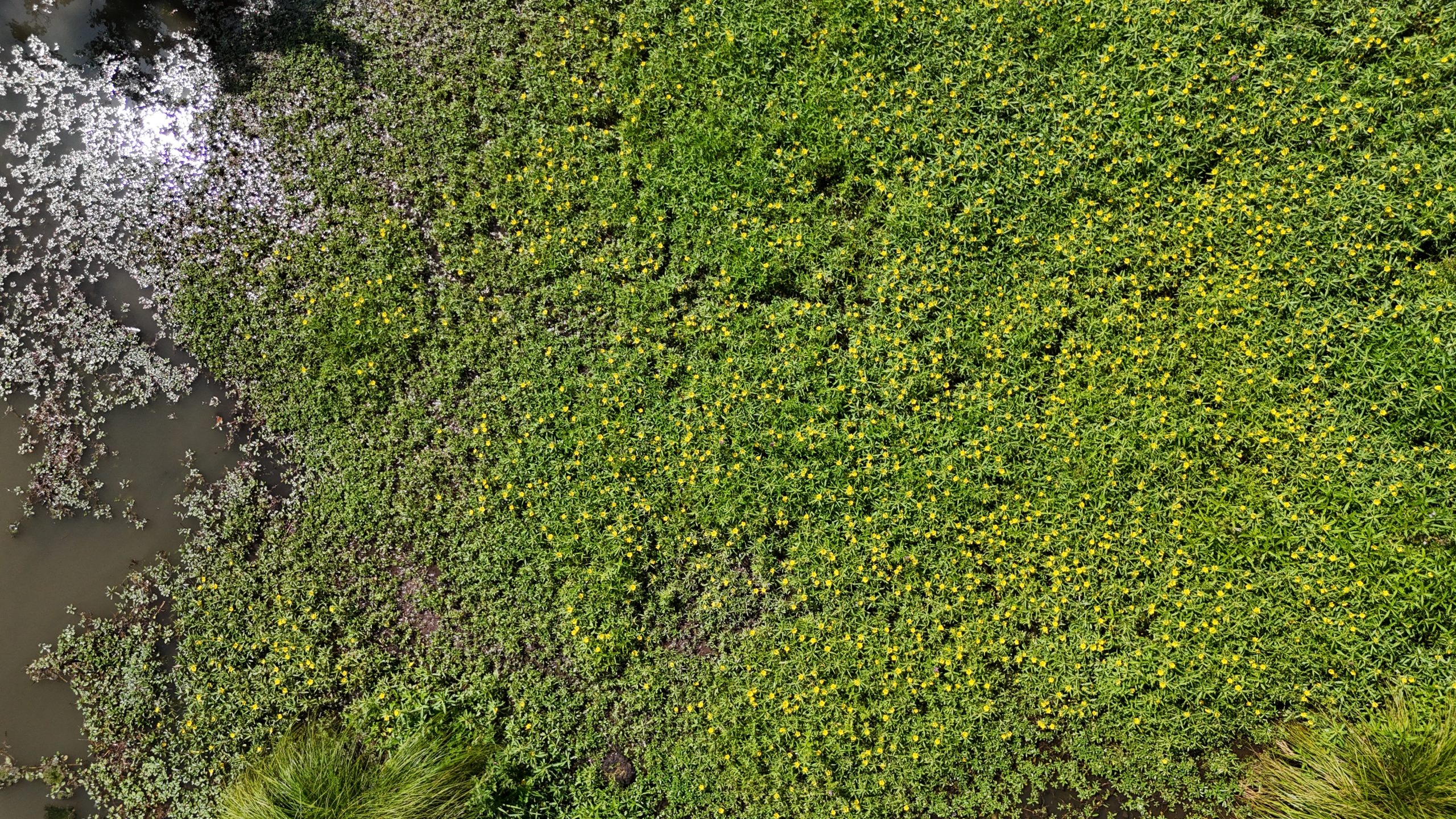
In the Santerre Haute-Somme region , more precisely in the towns of Mesnil-Bruntel and Péronne , lies the historical home of one of these species: the large-flowered water primrose (Ludwigia grandiflora). This aquatic and amphibious plant, native to South America, poses serious problems for aquatic environments due to its rampant growth. The dense mats it forms limit the diffusion of oxygen and light, causing asphyxiation of the environment and thus the disappearance of aquatic life.
To manage this invasive plant at its historical site, a partnership approach has been established between the Communauté de Communes de la Haute-Somme , the Somme watershed management authority ( AMEVA ), and the Société du Canal Seine-Nord Europe (SCSNE). For SCSNE, this partnership has resulted in the acquisition of the site (46 hectares) as part of its ecological development program.
The water hyacinth uprooting operations began the week of August 18 on the SCSNE plots and will continue until the beginning of September.
This project, carried out in partnership with local stakeholders, has several objectives:
fight against invasive alien species (IAS), especially the Jussie,
restore them master currents of the Somme, by allowing the river to flow into the main branches and thus limit sedimentation favorable to the installation of IAS,
rehabilitate 15 hectares of wetlands.
In parallel, the SCSNE, in conjunction with the startup Disaitek , is attempting to develop a specific detection method using AI to create a dedicated tool for satellite image recognition and mapping of areas colonized by water primrose. This tool would greatly facilitate the identification of infestations in often hard-to-reach areas, thus allowing for more targeted action.