The Seine-Nord Europe Canal is an ecological project by nature: its ambition is to reconcile economy and ecology, by putting river transport at the heart of the exchange of goods in France and Europe. Its environmental approach is reflected at each stage.
A rigorous design
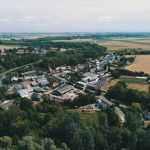
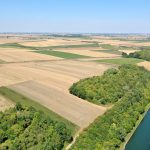
The Canal was designed within an extremely rigorous framework that ensures respect for the environment, notably through the application of the "Avoid-Reduce-Compensate" approach. With the participation of numerous experts, studies, consultations, and regulatory procedures ensured the integration of all environmental considerations into the project: preservation of water resources, fauna and flora, and integration of the Canal into its surrounding landscape.
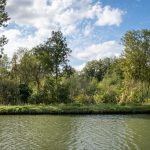
Beyond the regulatory dimension, the environment is an essential component of the Seine-Nord Europe Canal, which is intended to be a "living canal" , a place of welcome and life for multiple species, serving the biodiversity of the territory.
A demanding achievement
The Canal is committed to minimizing the environmental impact of the works . The specifications for the companies involved in the project fully incorporate this dimension. They are based on best practices such as encouraging the use of river and rail transport for the supply of construction materials, and the reuse and valorization of surplus soil on the construction site or within local sectors or projects.
Operation under control
The Canal will be operated with a constant focus on water conservation, notably through innovative technical solutions : monitoring the performance of the sealing, recycling water at the locks… Monitoring indicators will be put in place to verify the effectiveness of the measures taken and adjust the resources as needed.
An independent body created in 2018, the Environmental Observatory advises the Seine-Nord Europe Canal Company on the design of the Canal and monitors its effects on the environment, during the works and up to 10 years after its construction.
Initiated voluntarily by SCSNE, the High Environmental Quality (HQE Infrastructures) certification process, awarded by the independent body Certivéa, anchors and guides the Canal's commitments to sustainable development and eco-design. This certification commits the project owner and all project managers and companies involved in the construction project within a rigorous common framework.
This certification attests at the end of each phase (Program / Design / Implementation) that the project has been carried out in an exemplary manner to meet the four major challenges of sustainable development: quality of life, respect for the environment, economic performance and responsible management.
The certification framework is made up of four sustainable development commitments and 17 objectives, including water management, listening to the needs and expectations of stakeholders, resilience and risk management, etc.
The SCSNE established a diagnosis, identified the challenges of the project and declined more than 200 measurable actions. Audits are carried out at each stage of progress, and the objectives are integrated into the SCSNE's public contracts.
The HQE certificate is a recognition of SCSNE's environmental performance and highlights efforts to implement environmentally friendly practices throughout the development of its Seine-Nord Europe Canal project.
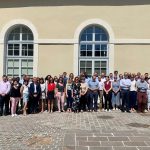
Certification for the program and design phases of sectors 1 to 6 has been obtained.