The protection of property and people is deeply embedded in the approach of the Seine-Nord Europe Canal Company. The project's design, construction, and operation of the waterway all converge around this central principle.
The SCSNE Prevention Master Plan, co-written with OPPBTP, DREETS, and CARSAT, is a document that establishes strategic guidelines for risk prevention within SCSNE. It is a management tool that defines the stakeholders, objectives, actions to be taken, and resources to be implemented.
Document
Added on January 12, 2024 - Updated on July 21, 2026
The safety of people is the main priority of the Seine-Nord Europe Canal Company. It implements all necessary measures to ensure the safety of its direct and indirect employees (companies, subcontractors, stakeholders, etc.).
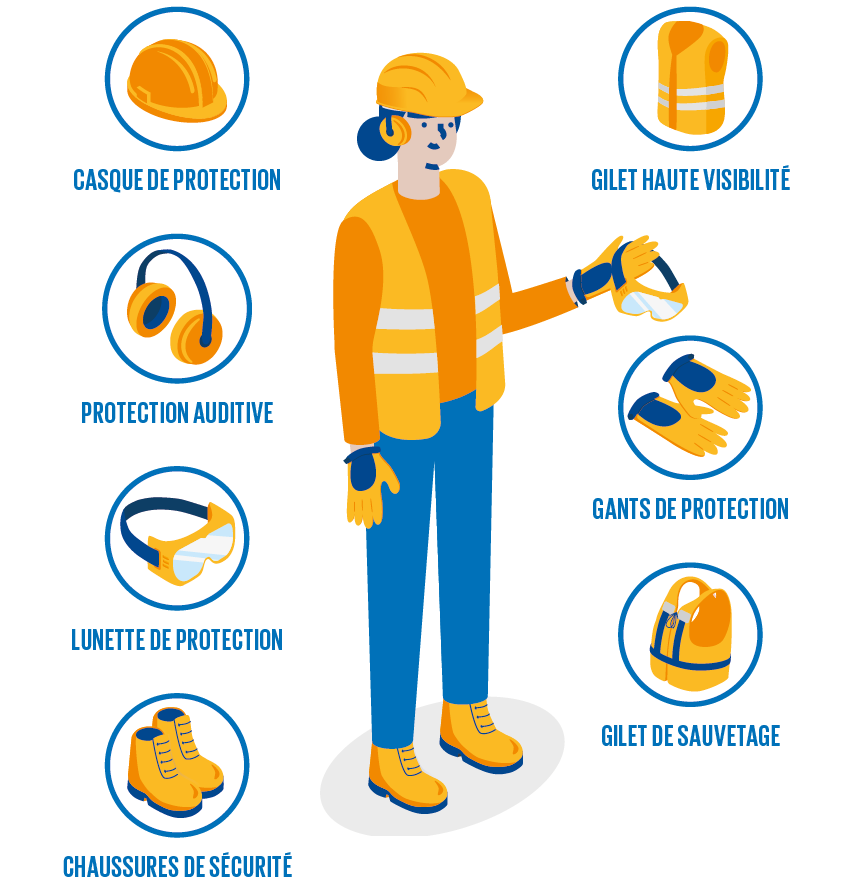
Clauses are thus incorporated into contracts signed with companies and their subcontractors: noise limitation, workplace control, pyrotechnics studies, support for temporary workers, traffic regulation, improved reception, use of personal protective equipment, and cleaning of technical areas are all fundamental requirements to be met. Regular audits, visits, and inspections support this entire process.
Residents are the primary partners in ensuring safety . Regularly informed of upcoming works, they can report any difficulties to the works or area managers (in the "Contacts" section of the website). Specific signage will also be installed at the various construction sites and along the bypass routes to remind everyone of best practices for ensuring their own safety and that of others.
SCSNE plays an essential role in promoting a culture of quality, safety and environment, while ensuring its compliance with applicable standards and regulations.
His main responsibilities are to:
Controlling Quality Assurance on construction sites through a rigorous process, continuous improvement and regular audits and feedback on Quality, Safety and Environment deployed in the field;
Ensure compliance with commitments for Environmental Protection by monitoring and promoting the HQE (High Environmental Quality) certification process by all stakeholders, including subcontractors and service providers;
To provide expertise and assistance to sector management in matters of prevention, safety, site security, and this for all personnel working on the Canal in order to ensure compliance with regulations.
The role of the CSPS
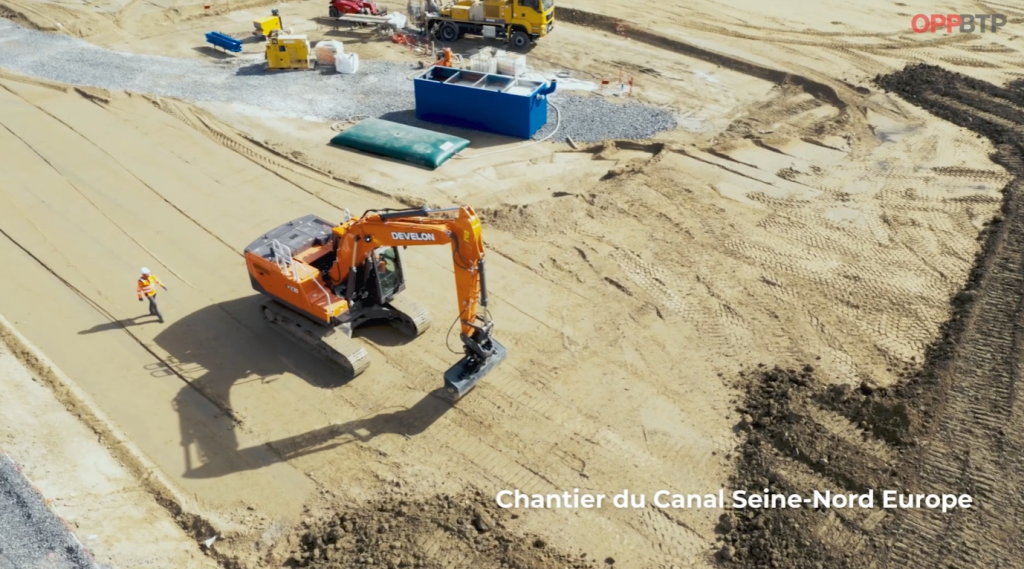
During the construction period, eight years during which the safety of the teams, residents and inhabitants must be ensured , SCSNE is committed, with Safety and Health Protection Coordinators (CSPS) in each of the sectors of the route.
His main responsibilities are to:
Ensure that only authorized persons enter.
Coordinating the various stakeholders on the construction site: to this end, he develops the General Coordination Plan (GCP) and ensures its implementation,
Conducting Joint Inspection Visits (JIVs) with companies working on construction sites,
Communicate and raise awareness about safety among all people entering construction sites.
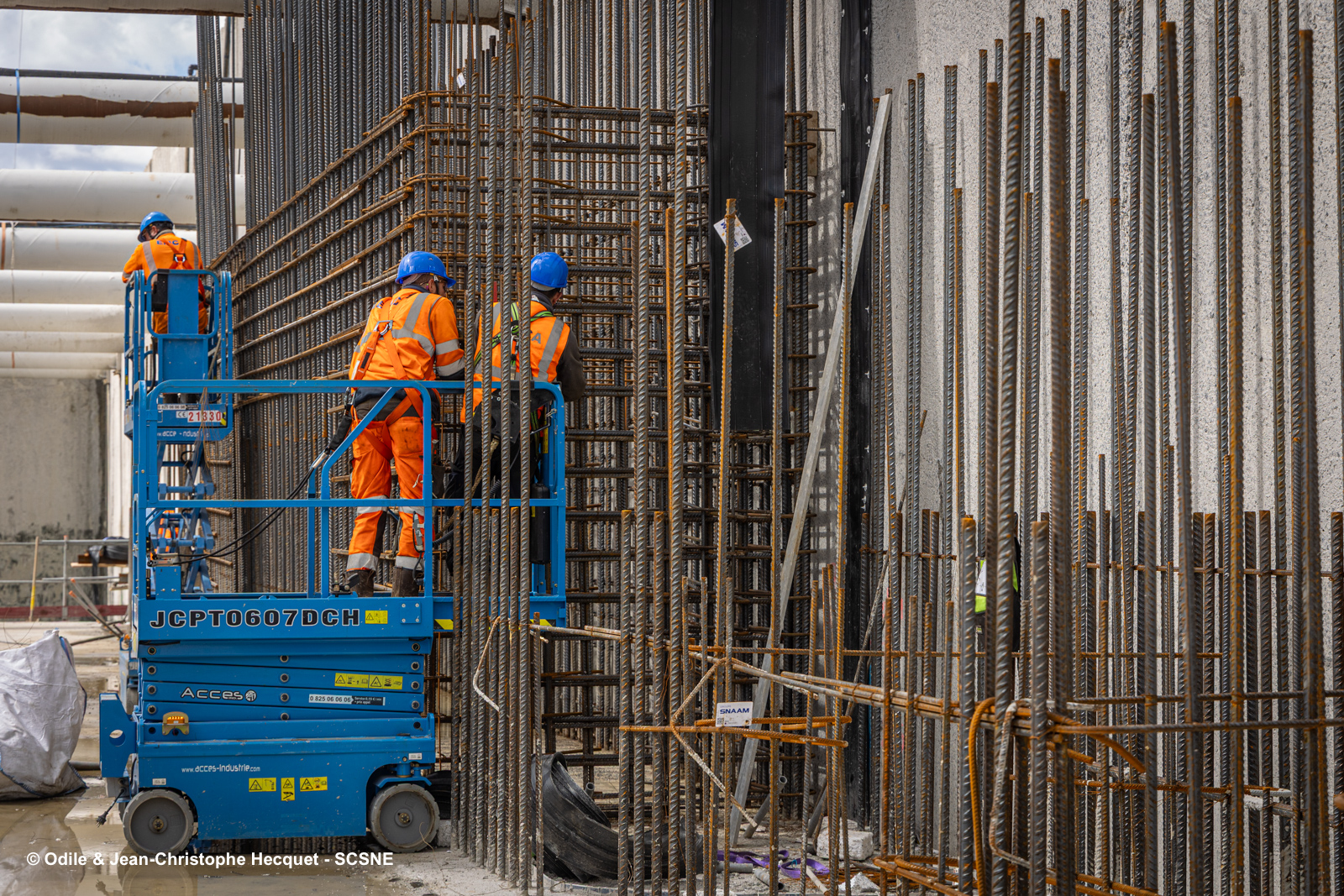
On-site, safety rules are strict: mandatory use of personal protective equipment (PPE), marked traffic flow, access control, and maintenance of work areas. Priority is given to collective protective measures, supplemented by individual equipment when necessary. Daily briefings and regular inspections ensure continuous improvement of practices.
As employers, companies are on the front line in protecting the health of their employees. Safety also depends on their vigilance: reporting a hazard, halting a risky operation, and suggesting improvements are all part of the worksite culture. SCSNE, for its part, is committed to promoting and maintaining a shared commitment to prevention among all.
Clauses are included in the contracts signed with companies and their subcontractors: noise limitation, traffic regulation, the use of personal protective equipment , and the cleaning of technical areas are all fundamental requirements to be met. Regular audits, visits, and inspections support this entire process.
Finally, residents are the primary partners in ensuring safety . Regularly informed of upcoming work, they can report any difficulties to the project or regional managers (in the "Contacts" section of the website). Specific signage is also planned at the various construction sites and along the bypass routes to remind everyone of best practices for ensuring their own safety and that of others.
Innovation at the service of safety
In the construction industry, new solutions are emerging to better anticipate risky situations, avoid hazards, and protect workers. The Canal construction site represents an opportunity for innovation.
The Canal Prevention Passport
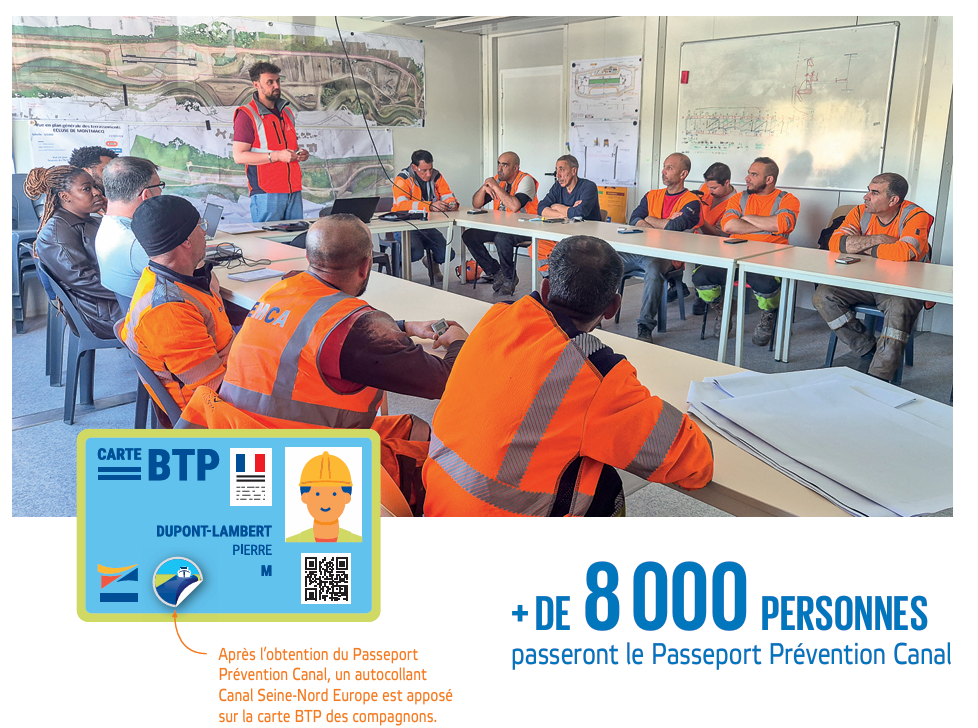
This awareness tool, developed with OPPBTP as part of its partnership with SCSNE, is mandatory for every Canal worker, regardless of their experience level. It is issued following an awareness session led by OPPBTP or SCSNE.
The program includes quizzes and sharing of best practices to verify and improve knowledge of the main risks on the construction site. Ultimately, more than 8000 people will obtain the Canal Prevention Passport.
Collision Avoidance System
The Canal construction site served as a testing ground for the Stop Collision system . This innovative solution uses technology and AI to eliminate the risk of collisions between vehicles and pedestrians. Onboard cameras, sensors, and radar detect people and obstacles near the vehicle and warn the driver via a screen in the cab. In the event of imminent danger, emergency braking is automatically activated.
This ambition is also realized through the signing of the " Frankly Safe Construction Site " Charter alongside the FRTP Hauts-de-France, the OPPBTP, the Carsat and the Dreets Hauts-de-France , affirming a collective approach in favor of an exemplary prevention culture.
This charter, developed by the FNTP with the support of the OPPBTP, aims to sustainably integrate health, safety and working conditions issues into all construction operations.
For SCSNE , this commitment goes beyond mere regulatory compliance: it reflects a desire to anticipate risks, protect workers, local residents, and all stakeholders, while improving the overall performance of construction sites . This approach is based on three priority themes identified following a thorough risk analysis: safety during work in traffic zones and the protection of local residents , prevention of risks associated with trench excavation , and improved hygiene conditions on construction sites.
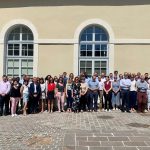
Signing of the Chantier Franchement Sûr charter at the Mayors’ Fair on 19/11/2024
These guidelines are implemented through contracts, the Prevention Master Plan , the Canal Prevention Passport , and actions carried out with partner companies. By placing prevention at the heart of project governance, SCSNE contributes to reducing workplace accidents, improving working conditions in the construction industry, and promoting new sustainable practices for major infrastructure projects.
Through this charter, the Canal Company also intends to share the feedback acquired on the Seine-Nord Europe Canal in order to advance the entire profession and to demonstrate that safety is a lever for performance, operational excellence and social responsibility.
Document
Added on November 20, 2024 - Updated on November 20, 2024
Press release - Signing of the Chantier Franchement Sûr charter
In general, river freight transport is economical, energy-efficient, and safe. Accidents are extremely rare on the river network.
When the canal is commissioned, European regulations on inland navigation and the transport of dangerous goods (ADNR) will apply. The crews, the people in charge of the maintenance of the structures and the visitors to the locks will have the necessary safety equipment. A specific prevention plan is integrated into the ORSEC (Civil Security Response Organization) plan.
These measures will help guarantee the safety and reliability of the Canal!
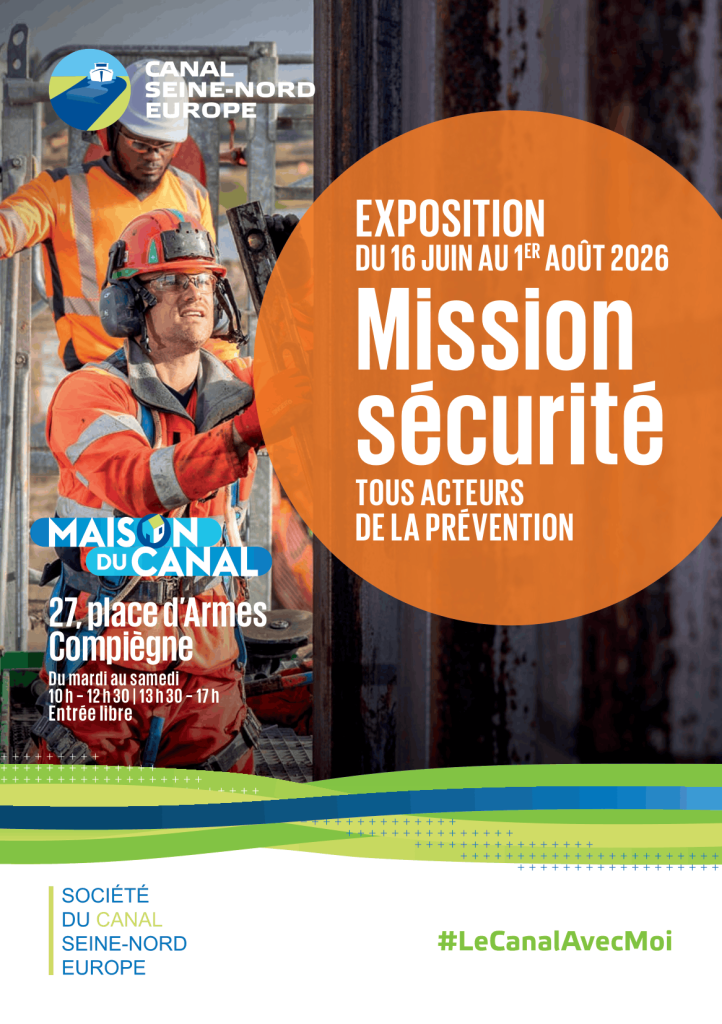
Discover the security exhibition
Security is everyone's business at all times.
Discover how the Seine-Nord Europe Canal Company and its partners work daily to ensure the safety of those who build and live near the Canal construction sites. Learn about the stakeholders and preventative measures, innovations, and safety initiatives at every stage of the construction project.