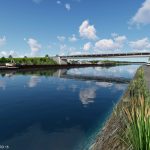
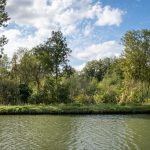
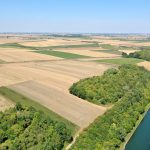
With the rescission of the Oise having been completed, the first phase of development of the river banks has begun with the planting of nearly 14 young shrub shoots and tree seedlings.
Since mid-February, about fifteen volunteers have been working to plant trees along the banks of the Oise River , following principles agreed upon in consultation. Their goal? To recreate a natural riparian zone along the riverbank once the plants have matured .
Among the shrub species planted are three-stamenon willows , osier willows , hawthorn, dogwood , and alder buckthorn . This diversity of species is typical of what can be observed along the banks of waterways in the region. In addition, young trees such as field maples , alders , black poplars , white willows , and smooth and field elms will also be planted.
These plantings are carried out during the winter months, when the soil is waterlogged, to encourage the plants to establish themselves. A pruning* of approximately 20 to 40 cm is also performed on the shrubs to optimize the development of their root systems before promoting the growth of new shoots.
*A pruning of the trunks consists of cutting back the stems and branches so that a tree or shrub develops its roots and then new, more vigorous branches.
Plantations near the RD66
After planting
A maintenance phase will be carried out during the spring and summer to prevent the young plants from being buried by spontaneous vegetation and to ensure they receive enough light to develop. In the autumn of 2025, an assessment of their recovery will be made, and depending on the results, additional plantings may be considered the following winter if necessary.
Development carried out according to the chosen scenario