Published annually by the Seine-Nord Europe Canal Company, the sustainable development report reviews the actions undertaken and the results achieved with regard to the SCSNE's four main priorities: safety, eco-performance, partnership with local communities, and innovation. The 2025-2026 edition thus looks back on a pivotal year marked by the ramp-up of construction work and the continuation of the project's environmental, social, and economic commitments.
Enhanced security on construction sites
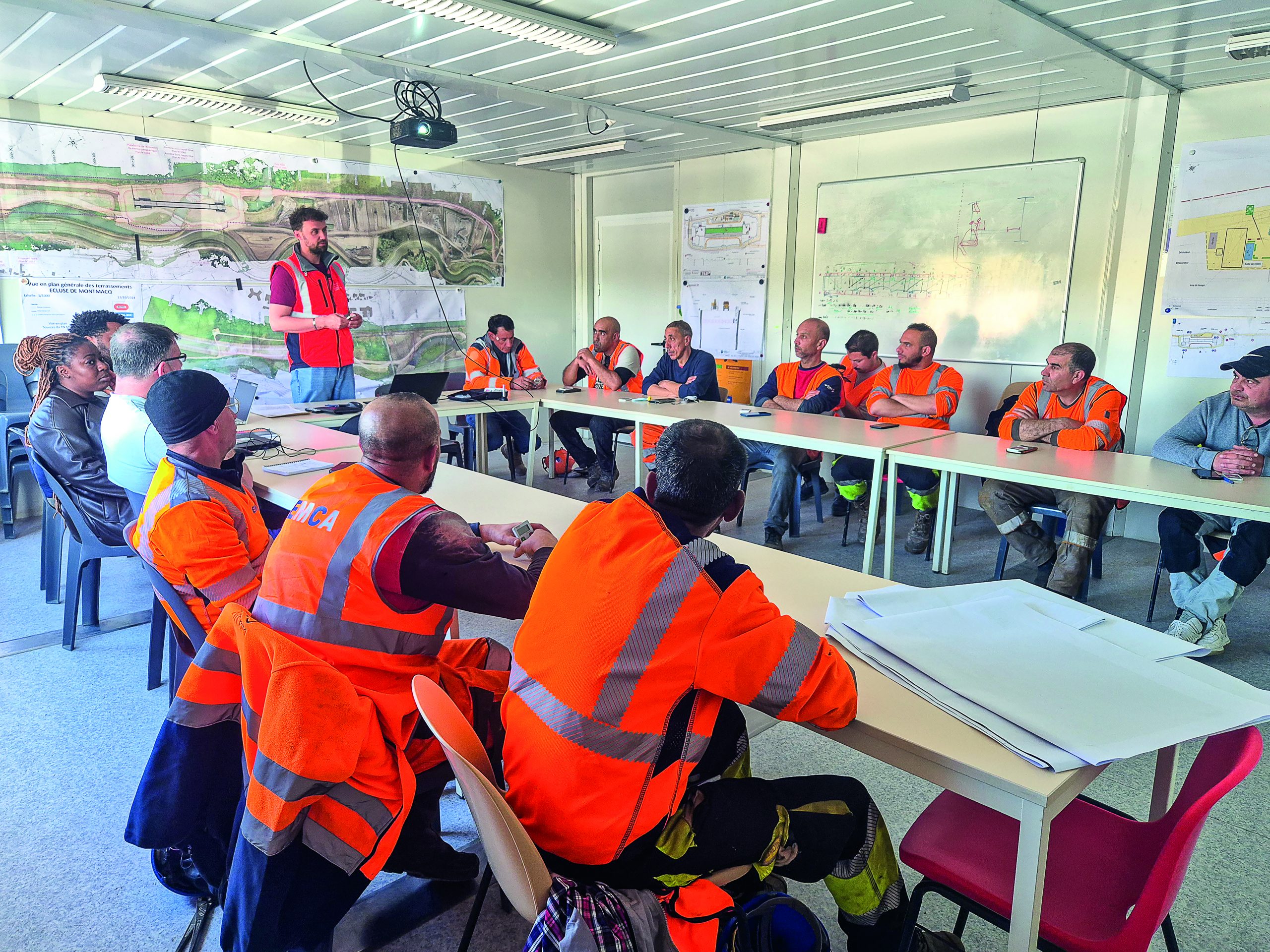
Safety remains the project's top priority. To date, over 650 people have been trained in the Canal Prevention Passport , a mandatory program for all workers to raise awareness of site risks. SCSNE teams have also conducted over 300 QHSE (Quality, Health, Safety, and Environment) inspections on the construction sites to further strengthen risk prevention.
These efforts are producing concrete results, with the construction site recording accident frequency rates and severity rates far lower than those observed in public works.
The continuation of environmental compensation and initial results
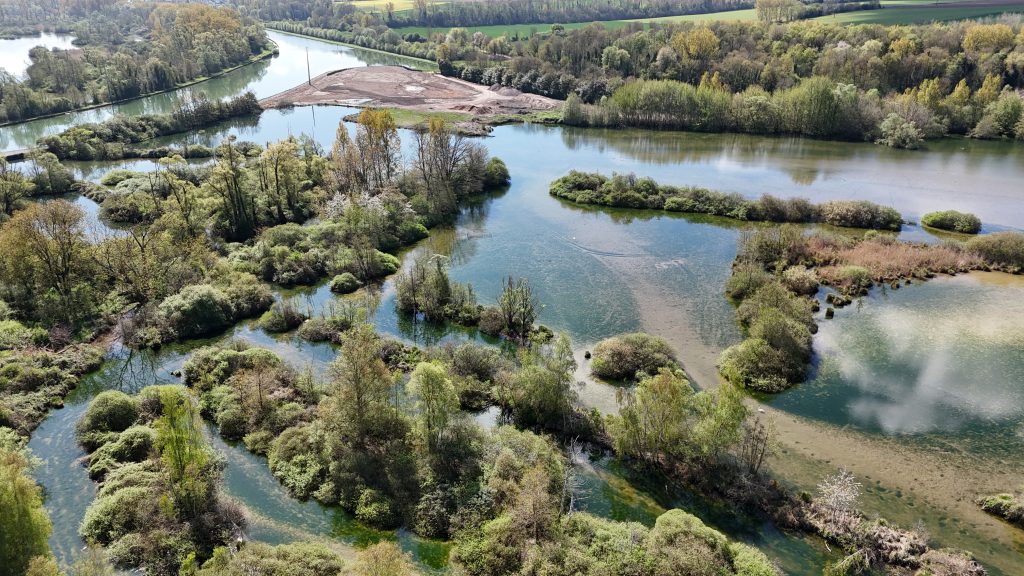
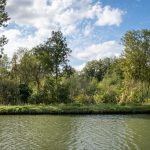
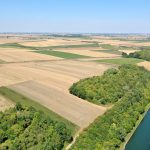
In 2025-2026, environmental improvements were carried out on sites representing 94 hectares in the Somme and Omignon valleys in order to restore natural habitats. This brings the implementation of compensatory measures to 278 hectares along the entire route, within a program of more than 1,200 hectares.
The first ecological monitoring carried out on sites developed in recent years, particularly in the Oise region, shows encouraging results, with the return or strengthening of several heritage species such as the Corn Crake or the Greater Water-parsnip.
On construction sites, CO₂ emissions are closely monitored and limited as much as possible. Thus, the Oise rescinding works generated 44,138 tonnes of CO₂ equivalent, a result 4% lower than the initial forecasts.
Responsible resource management is also progressing. The TerraCanal digital tool developed by the Société du Canal Seine-Nord Europe has already made it possible to track 2,2 million m³ of excavated materials, 39% of which have been reused on the project or in recovery channels.
Concrete benefits for employment and the local economy
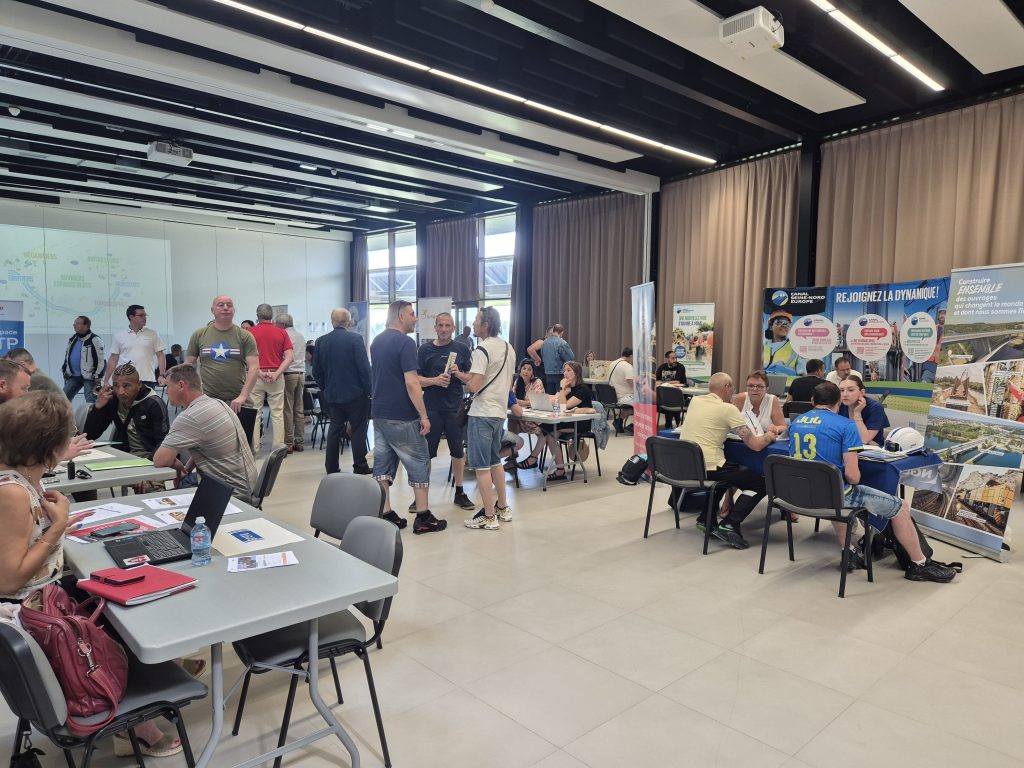
Through the Grand Chantier initiative, SCSNE and its partners are pursuing their objective of maximizing the economic and social benefits of the project. In 2025, 292 local initiatives and 70 specific Seine-Nord Europe Canal initiatives were organized to promote careers related to the Canal and prepare for future recruitment.
The project now involves approximately 700 people, 50% of whom reside in the Hauts-de-France region. Social inclusion clauses have enabled 209 people facing barriers to employment to benefit from professional opportunities, representing 161,000 hours of work integration. The major construction contracts awarded by SCSNE in the first half of 2026 will alone generate 800,000 hours of work integration.
An ongoing dialogue with the territories
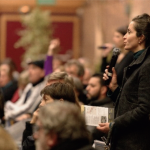
Informing and involving residents, elected officials, and local stakeholders remains central to the SCSNE's approach. In 2025, 450 exchange sessions were organized in the areas crossed by the Canal , in addition to the distribution of 7 local newsletters, 28 construction updates, 11 press releases, and 27 educational videos.
This on-the-ground presence allows us to support residents at the pace of the progress of the work, while explaining the issues and benefits of the future Canal for the territory.
A decisive phase for the progress of the work
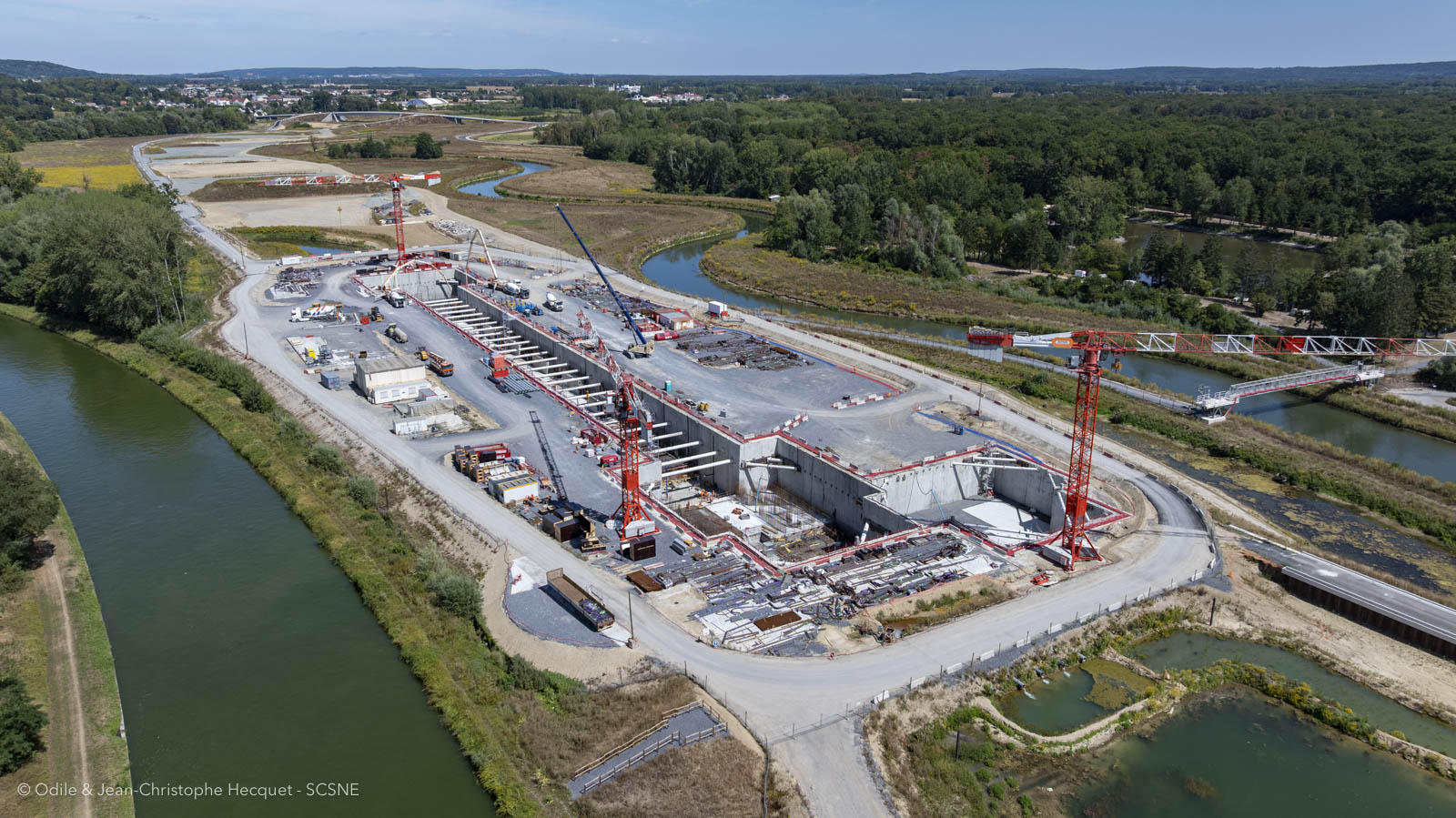
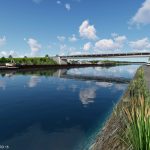
The year 2025-2026 marks the entry into a new phase of the project with the start or acceleration of several emblematic construction sites . Among the main achievements are the launch of works on the Montmacq-Cambronne lock, the start of the construction of the A2 viaduct, the construction of work quays facilitating the transport of materials by river and the start of the excavation work for the Oisy-le-Verger lock.
This modal shift strategy has already enabled the transport of more than 70,000 tonnes of goods by waterway , thus limiting road traffic related to the construction site.
Construction site of the Montmacq-Cambronne-lès-Ribécourt lock
Outlook 2026-2027
In 2026-2027, SCSNE will continue to strengthen prevention measures across all construction sites to support their ramp-up under the best possible safety conditions. It will pursue its eco-performance approach by monitoring the carbon footprints of construction sites, facilitating the use of alternative transport modes for site logistics, and mobilizing local economic stakeholders to promote the reuse of excavated materials generated by the work. In parallel, the SCSNE will maintain a transparent and educational dialogue with local communities, particularly through the development of new tools for young audiences. Finally, on the construction site, this period will be marked in particular by the start of the main TOARC works on sector 1, launch of the excavation works for the Noyon lock and commissioning of the A2 viaduct by mid-2027.
To discover all the actions, indicators and projects carried out by the Société du Canal Seine-Nord Europe in terms of sustainable development, consult the 2025-2026 sustainable development report in its entirety.
Document
Added September 30, 2026 - Updated September 30, 2026