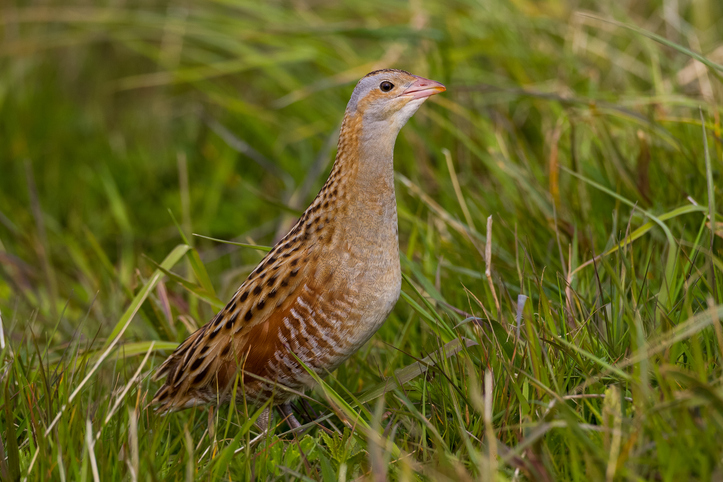
A Corncrake, a critically endangered and protected bird species, has just been detected at an environmental compensation site along the Seine-Nord Europe Canal. A remarkable and very encouraging discovery for the naturalist community.
A SUITABLE WET MEADOW
It was at nightfall that ecologists were able to hear the song of a male Corn Crake, during a monitoring carried out on one of the Canal compensation sites in the middle valley of the Oise.
A characteristic song (the "tsss tsss" in the background of frog croaking), used only during the current breeding season, to mark its territory and attract females.
This is a remarkable discovery for this protected bird species in danger of extinction since only 80 singing males were counted in France in 2022 (2450 at the beginning of the 80s).
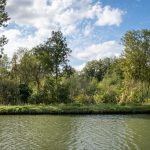
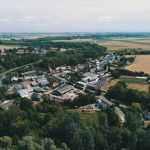
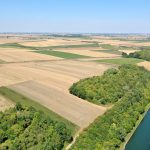
The area where the Corncrake was heard is one of the sixty environmental development sites deployed by the SCSNE over more than 1200 hectares.
The restoration work on these wet meadows , undertaken in 2022, combined since then with site maintenance favoring late mowing , has allowed the return of this protected species to an area where it had not been seen for a very long time. Indeed, the Corn Crake particularly favors wet meadows where the grass is high enough to allow it to move about safely, protected from predators, and where it has a diverse range of prey.
To provide the necessary peace and quiet for this species during the breeding season, all work in the meadow has now been stopped until the beginning of September.
Let's keep our fingers crossed that this male attracts a female(s) to help maintain the species!
This migratory bird, about the size of a quail, is found mainly in Europe during its breeding season and in Southeast Africa during its wintering period.
During the breeding season, it has a varied diet consisting of insects, their larvae, spiders, gastropods, earthworms and potentially plants.
The Rail can produce two broods per year , with separate females, the first in April-May, the second in June-July.